Key Takeaways
- Data analytics answers 'what happened?'; data science answers 'what will happen?' — both are essential but serve different business functions at different stages of data maturity.
- According to the US Bureau of Labor Statistics (2023), data scientists earn a median of $108,020 vs $75,000–$95,000 for mid-level data analysts, reflecting the deeper technical requirements.
- Most businesses should build analytics capabilities first — clean dashboards and reliable reporting unlock the business intelligence needed to define meaningful ML problems worth solving.
- Data science and analytics work best in sequence: analysts surface patterns in historical data, scientists build models to predict and automate responses to those patterns.
Don't Skip Analytics to Get to Data Science
Data science and data analytics are the two roles businesses most often confuse when building their first data team. The mistake costs real money: hiring the wrong one delays your actual needs by 12–18 months and typically exceeds $100,000 in salary before the mismatch becomes obvious.
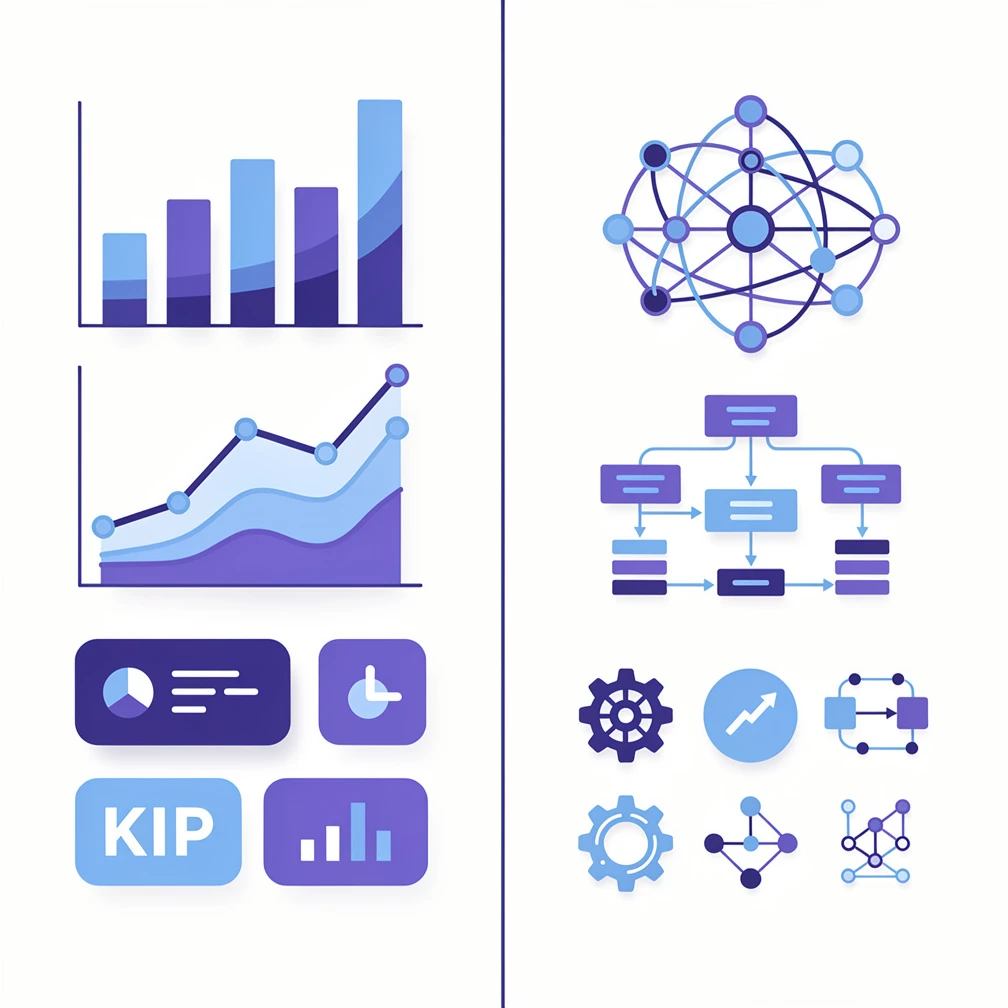
The short version: data analytics tells you what happened and why, using historical data, dashboards, and reporting. Data science predicts what will happen next, using machine learning, statistical modeling, and experimentation. Both are valuable — but they solve different problems, at different stages of business maturity.
This guide breaks down every dimension that matters: role definitions, required skills, tools, salary benchmarks, and which hire your business actually needs right now. If you’re also evaluating where machine learning engineering fits into your data team, see our companion guide on data science vs machine learning: key differences. And to understand how data science relates to the broader AI field — including when to hire AI engineers versus data scientists — see data science vs AI: key differences for business.
Core Definitions: What Each Role Actually Does
Data analysts and data scientists both work with data, but their outputs differ fundamentally. Analysts deliver insights from historical data — dashboards, reports, trend analysis. Data scientists build systems that generate predictions — models, algorithms, and automated decisions. Think of analysts as diagnosticians of what happened and scientists as architects of what comes next.
The Data Analyst Role
A data analyst’s job is to make sense of historical data and communicate findings to stakeholders. They extract data from databases using SQL, clean and transform it, visualize it in tools like Tableau or Power BI, and present actionable insights to business teams.
Core outputs for a data analyst include:
- Dashboards that track business KPIs in real time
- Ad hoc analyses answering specific business questions (“Why did churn spike in Q3?”)
- Monthly and quarterly reports for executives and department heads
- A/B test analyses measuring the performance of two approaches against each other
Data analysts need strong SQL, at least one visualization tool, and excellent business communication. They typically don’t write production code or deploy models into live systems. Their value is turning raw data into decisions — quickly and consistently.
For a full breakdown of the data analyst career path, compensation, and core tools, data analytics jobs: roles, skills & AI tools covers the complete landscape from junior analyst to VP of Analytics. For a focused look at what the role entails day-to-day — including skills required, salary benchmarks, and when to make the hire — see our complete data analyst guide.
The Data Scientist Role
A data scientist builds models that predict future outcomes, automate decisions, or surface non-obvious patterns in data. They write code in Python or R, apply machine learning algorithms, run controlled experiments, and deploy models into production environments.
Core outputs for a data scientist include:
- Predictive models — customer churn prediction, demand forecasting, lead scoring
- Recommendation systems — connecting users to products, content, or actions they’re likely to engage with
- Experiment frameworks — designed experiments with proper statistical controls and causal analysis
- ML pipelines — automated systems that process data and generate predictions at scale with minimal manual intervention
A data scientist works at the intersection of mathematics, programming, and domain knowledge. They need statistical depth alongside software engineering skills.
Where the Two Roles Overlap
The overlap zone is exploratory analysis and insight generation. Both roles write SQL, both explore datasets to understand distributions and anomalies, and both communicate findings to non-technical stakeholders. The structured approach to this exploration is covered in our guide on exploratory data analysis (EDA). The divergence point is what happens after that initial exploration: the analyst writes a report; the scientist builds a model.
In small teams, one person often does both. The distinction matters most at hiring time: a job description that asks for ML modeling experience alongside Excel dashboards will attract neither specialist and frustrate both types of candidate.
Skills and Tools: What Each Role Requires
The skills required for data analytics and data science diverge most at the coding depth and statistical sophistication needed. Analysts need proficiency; scientists need expertise. This gap directly explains the salary differential and the 18–36 month career path between the two roles.
For a precise breakdown of which languages each role needs, at what coding depth, and how to screen candidates effectively, see our guide on does data science require coding.
The Data Analytics Stack
A mid-level data analyst is typically proficient in the following tools and skills:
- SQL (intermediate to advanced — window functions, CTEs, query optimization)
- Business Intelligence: Tableau, Power BI, or Looker for dashboard creation
- Cloud Data Warehouses: Snowflake, BigQuery, or Redshift for querying large datasets
- Python or R (basic — data cleaning, simple statistical summaries, pandas/tidyverse)
- Spreadsheets: Advanced Excel or Google Sheets for ad hoc analysis and presentations
- AI-assisted analytics: Tableau Pulse, GitHub Copilot, and ChatGPT for accelerating EDA workflows
For a current overview of AI-powered tools that modern analysts use day-to-day, best AI tools for data analysis covers the platforms transforming the analytics workflow.
The Data Science Stack
Data scientists require deeper technical foundations, particularly in statistical modeling and software engineering practices:
- Python (proficient — object-oriented programming, package management, production-quality code)
- ML Frameworks: scikit-learn for classical ML, TensorFlow and PyTorch for deep learning, XGBoost for gradient boosting
- Statistics: Probability distributions, hypothesis testing, Bayesian inference, causal reasoning
- MLOps Platforms: MLflow, DVC, Kubeflow, or cloud ML services (AWS SageMaker, Google Vertex AI, Azure ML)
- Jupyter Notebooks for exploratory modeling and experiment documentation
- Version Control: Git for collaborative model development and code review
- Data Engineering: Familiarity with Airflow, Spark, or similar frameworks for building data pipelines
Data scientists who deploy models into production must master online, batch, and edge inference patterns to manage cost and latency at scale — a skill gap that often catches first-time model deployers off guard.
Skills Comparison at a Glance
| Skill Area | Data Analyst | Data Scientist |
|---|---|---|
| SQL | Advanced | Intermediate–Advanced |
| Python/R | Basic–Intermediate | Advanced |
| Statistics | Descriptive | Inferential + Probabilistic |
| Machine Learning | Familiarity | Expert |
| Data Visualization | Expert | Intermediate |
| Business Communication | Expert | Intermediate–Strong |
| Data Engineering | Light | Moderate |
| MLOps / Deployment | Rarely required | Required |
| Business Acumen | High | High |
Common mistake: Don’t assume your data analyst can “learn ML on the side” while doing their primary job. The skill gap between analytics proficiency and production-ready ML engineering typically takes 18–36 months of deliberate, focused effort to close.
Salary Benchmarks and Market Demand in 2026
Data science pays more than data analytics at every experience level — but both roles show strong growth trajectories. According to the US Bureau of Labor Statistics (2023), the median data scientist salary is $108,020 annually, compared to $75,000–$95,000 for mid-level data analysts. The BLS projects 35% job growth for data scientist roles through 2033 — nearly five times the average for all US occupations.
Data Analyst Compensation
Mid-level data analysts at established companies typically earn $75,000–$100,000 in the US, rising to $110,000–$130,000 for senior analysts at technology-forward firms. Entry-level analysts with SQL and Tableau skills typically start at $55,000–$70,000.
Compensation varies significantly by specialization:
- Analytics Engineers (dbt, Airflow, Fivetran focus): 20–30% premium over pure analysts
- Growth Analysts (product analytics, A/B testing): $90,000–$120,000 at mid-level
- Business Intelligence Leads (team management + architecture): $120,000–$150,000+
For specific job title breakdowns and hiring criteria by role, data analytics job description: 2026 hiring guide covers compensation benchmarks and how to write effective job postings that attract the right candidates.
Data Scientist Compensation
The US Bureau of Labor Statistics (2023) sets the median data scientist salary at $108,020, with senior data scientists at technology companies typically earning $150,000–$220,000 including equity. Specialist roles command additional premiums:
- ML Engineers (model deployment and infrastructure): $130,000–$180,000
- Research Scientists (novel algorithm development): $150,000–$250,000+
- MLOps Engineers (model operations and monitoring): $120,000–$160,000
Australian salaries are typically 20–30% below US benchmarks in base compensation, but startup equity packages in major cities are closing the gap. For context on the global data science talent market, is data science oversaturated? examines supply and demand at each skill tier in detail.
What the Demand Data Actually Shows
McKinsey Global Institute research shows that data-driven organizations are 23 times more likely to acquire new customers, 6 times more likely to retain them, and 19 times more likely to be profitable than competitors who rely on intuition (McKinsey, Analytics Comes of Age, 2018). That commercial imperative sustains demand at both analyst and scientist levels.
The nuance: entry-level data science is competitive. Senior and specialist roles — particularly MLOps engineers, causal inference specialists, and domain experts in healthcare, finance, and supply chain — remain genuinely scarce. IBM’s 2022 Global AI Adoption Index found that 35% of companies cited hiring challenges as their primary barrier to AI implementation.
Ready to build your data team? GrowthGear has helped 50+ startups and scale-ups structure analytics and data science functions that deliver measurable ROI. Book a Free Strategy Session to discuss your data roadmap.
Which Role Should Your Business Hire First?
Most businesses should hire a data analyst before a data scientist. If you can’t yet answer “what happened last quarter?” with a reliable dashboard, you’re not ready to predict “what will happen next quarter?” with a model. Data science built on dirty, uncurated data produces unreliable predictions that erode stakeholder trust faster than no predictions at all.
When to Start with a Data Analyst
Hire an analyst first if your business matches any of these profiles:
- Pre-reporting stage: No consistent dashboards, KPIs tracked in spreadsheets, revenue reporting done manually
- Data quality issues: Multiple disconnected data sources with no single source of truth, or inconsistent metric definitions across teams
- Limited data history: Less than 12 months of structured, clean transaction or behavioral data to model from
- Decision velocity problem: Key business decisions are slow because data is hard to access or requires manual extraction
A strong data analyst builds your data infrastructure, standardizes metric definitions, and creates dashboards that answer recurring business questions. This process also produces the clean, well-labeled data that machine learning models need to generate accurate predictions.
Setting up proper analytics tracking is a prerequisite for any data function. How to set up Google Analytics 4 covers the measurement foundation your analyst will depend on for web and conversion data.
When to Hire a Data Scientist
Hire a data scientist when you have a specific prediction problem worth solving and the data infrastructure to support it:
- Clear ML use case: You need to forecast demand, score leads, predict customer churn, or personalize recommendations at scale
- Data maturity: 12+ months of structured, clean transaction or behavioral data, with a working data warehouse
- Budget: $100,000+ for an in-house hire, or $15,000–$40,000 for a project-based contractor engagement
- Technical foundation: Clean data pipelines, version-controlled code, and a working BI layer already in place
GrowthGear’s guide to hiring a data scientist covers the complete hiring process — technical assessments, interview questions, and the in-house versus outsource decision framework — in detail.
What Business Leaders Are Saying
In practice, business leaders consistently report that a strong analytics function delivers ROI faster than early data science investment. Teams that prioritize dashboards and SQL-based reporting first typically reduce “decision latency” — the time from business question to actionable insight — from weeks to hours within the first 90 days of hiring an analyst.
The most common regret reported by CTOs and operations leaders is the reverse: hiring a data scientist to “do machine learning” before having reliable data pipelines. These hires spend 60–80% of their time on data cleaning and pipeline work rather than modeling — a poor use of a $120,000+ salary.
The businesses that see the highest ROI from ML models are those where a data analyst laid the groundwork first. The analyst documents the data landscape, builds data quality processes, and identifies the specific prediction problems most worth solving. The data scientist then inherits a clean, documented foundation and can ship a production model in weeks rather than months.
How Data Science and Analytics Work Together
Data science and data analytics are complementary, not competing. Organizations that treat them as separate functions end up with analysts who can’t access model outputs and scientists who build models nobody uses. The highest-performing data teams run them as a pipeline: analytics surfaces patterns in historical data, data science builds models to predict and automate responses to those patterns.
Building a Data Team That Scales
The most scalable early data team follows a deliberate hire sequence:
Phase 1 (Months 0–18): One generalist data analyst who owns dashboards, SQL reporting, and data quality. The primary goal is answering retrospective questions consistently and building a clean data layer.
Phase 2 (Months 18–36): Add a second analyst or an analytics engineer (dbt, Airflow, Fivetran) to build reliable, automated data pipelines. The goal is moving from manual reporting to a self-service data infrastructure.
Phase 3 (Month 36+): First data scientist, working on one specific, high-value prediction problem with a clean data foundation already in place. The goal is shipping a production model that automates a decision that currently requires manual analysis.
This sequencing is consistent with how successful data teams scale in practice — and it aligns with GrowthGear’s experience across 50+ startup and SMB engagements, where clients who built analytics before data science saw an average 156% faster path to measurable ML ROI.
Integration Patterns That Work
The most effective integration pattern between analytics and data science functions divides responsibility clearly:
- Analytics owns the retrospective: What happened, why it happened, and what metric moved and when.
- Data science owns the prospective: What will happen, with what probability, and how to automate the response.
- Shared ownership of data quality: Both roles depend on clean, well-labeled data. Neither should be responsible for the other’s data issues — that dependency belongs to a shared data engineering function.
Modern CRM platforms increasingly bridge both disciplines, combining analytics dashboards with early ML features like lead scoring and churn prediction. Best CRM software for small business teams covers platforms that give smaller teams both analytics and prediction capabilities without requiring separate data infrastructure or specialist hires.
Take the Next Step
Deciding between a data analyst and a data scientist — or figuring out when to build both — doesn’t have to be guesswork. GrowthGear has helped more than 50 businesses structure data teams at every stage, from first analytics hire to production ML deployment.
Book a Free Strategy Session →
Data Science vs Data Analytics: Summary
| Dimension | Data Analytics | Data Science |
|---|---|---|
| Primary question | What happened? | What will happen? |
| Core output | Dashboards, reports | ML models, predictions |
| Required coding depth | SQL + basic Python | Advanced Python / R |
| Statistics depth | Descriptive | Inferential + Probabilistic |
| Median salary (BLS 2023) | $75,000–$95,000 (mid-level) | $108,020 |
| Hire sequence | First | Second (after analytics) |
| Time-to-value | 30–90 days | 3–12 months |
| AI automation impact | High for routine tasks | Moderate — raises skill floor |
| Data maturity needed | Any stage | 12+ months of clean data |
| Best for | Retrospective decisions | Predictive automation |
Sources & References
- US Bureau of Labor Statistics — Occupational Outlook: Data Scientists — Median annual wage $108,020 (May 2023); 35% projected job growth through 2033 (2024)
- McKinsey Global Institute — “Analytics Comes of Age” — Data-driven organizations are 23× more likely to acquire customers, 6× to retain them, and 19× more likely to be profitable (2018)
- IBM — Global AI Adoption Index 2022 — 35% of companies cited hiring challenges as the primary barrier to AI implementation (2022)
Frequently Asked Questions
Data analytics answers 'what happened?' using historical data and dashboards. Data science answers 'what will happen?' by building predictive models. Analytics is descriptive and tactical; data science is predictive and requires deeper coding and statistics.
Data science pays more. The US Bureau of Labor Statistics (2023) puts data scientists at a median of $108,020 annually. Mid-level data analysts typically earn $75,000–$95,000, reflecting the deeper technical requirements of data science work.
Most businesses should hire a data analyst first. Without reliable dashboards and clean data pipelines, predictive models produce unreliable results. Build your analytics foundation before investing in data science.
Yes. Most data scientists start as analysts. The transition requires learning Python deeply, statistical modeling, and ML frameworks like scikit-learn. Most analysts complete this move in 18–36 months with focused study.
Data analysts use SQL, Tableau or Power BI, and cloud data warehouses. Data scientists use Python or R, ML frameworks (scikit-learn, TensorFlow), Jupyter notebooks, and MLOps platforms for model deployment and monitoring.
Yes. Data analytics is one component of the broader data science process. Data science encompasses analytics, ML model development, data engineering, and experiment design. Every data scientist needs strong analytics skills.
Most analysts transition in 18–36 months with deliberate skill-building: learning Python deeply, completing ML coursework (Coursera, fast.ai), and building portfolio projects with real predictive modeling on actual datasets.